Polycarbonate vs ABS Luggage: Which Shell Is Better? (October 2026)
Polycarbonate vs ABS luggage comes down to the case you need: choose polycarbonate for a scratch-resistant textured shell, or ABS for a lighter carry-on option. Compare each suitcase’s full dimensions, weight and features before deciding.
On this page (10 sections)
- Polycarbonate vs ABS luggage: what is the main difference?
- Who should choose polycarbonate luggage?
- Who should choose ABS luggage?
- Is one shell lighter than the other?
- What should you compare beyond the shell?
- How can you check carry-on fit before buying?
- How should you set up and care for a hard-shell suitcase?
- What mistakes can lead to the wrong case?
- Which case makes sense for your trip?
- Final decision on polycarbonate vs ABS luggage
For polycarbonate vs ABS luggage, choose a polycarbonate case if you want a shell described as scratch-resistant, or an ABS case if a lighter carry-on suits your priorities. The right choice depends on the complete suitcase, including its dimensions, wheels, handle, pockets and warranty.
Both materials are used for hard-shell bags, but the material label doesn't tell you everything you need to know. Compare the actual case features and decide how you travel before choosing a shell.
Polycarbonate vs ABS luggage: what is the main difference?
Polycarbonate and ABS are different shell plastics, but a specific suitcase’s features make the more useful comparison. The Samsonite Omni PC uses polycarbonate and has expansion; the Rockland Melbourne is made from ABS and includes interior pockets.
The Omni PC has a textured polycarbonate shell described as scratch-resistant, four multidirectional spinner wheels and a TSA lock. The Rockland has spinner wheels, expansion and mesh and elasticated pockets.
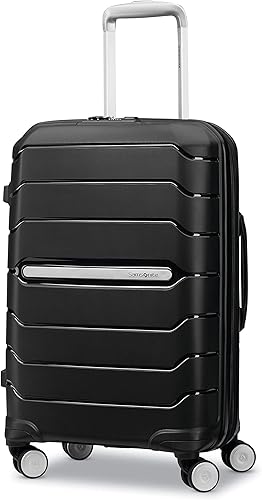
A third material can also make sense. The Samsonite Freeform is made of polypropylene, so it offers another hard-shell option if neither of the two materials is a must-have.

Who should choose polycarbonate luggage?
Choose a polycarbonate carry-on if you want the Omni PC’s textured, scratch-resistant shell and its combination of expansion and spinner wheels. Its stated 10-year limited warranty against defects in materials and workmanship may also matter if warranty coverage is part of your decision.
This option suits travelers who want a recognizable hard-shell feature set and plan to use the expansion when needed. It weighs 6.81 lb, so check whether that weight leaves enough room under your airline’s baggage allowance once you add your belongings.
Skip it if its full outside dimensions don't fit the cabin limits you need, or if you prefer a lighter listed carry-on. Its overall size is 22 x 15 x 9.5 in, and its expansion can add to packed dimensions.
Who should choose ABS luggage?
Choose an ABS carry-on if you want an expandable hard shell with interior pockets and a lower listed weight than the polycarbonate example here. The Rockland Melbourne weighs 6 lb and has spinner wheels, a mesh zip pocket and elasticated pockets.
Those features suit a traveler who values simple interior organization and plans to use a carry-on for shorter trips. The case has a 5-year warranty, which is shorter than the Omni PC’s stated warranty term.
Skip this specific case if you need dimensions that are clearly consistent before purchase. Measurements are given as 23 x 10 x 15.5 in with wheels and also as 20 x 13 x 9 in, so confirm the exact version and its outside size first.
Is one shell lighter than the other?
Compare the complete suitcase weights rather than assuming one shell material always makes a lighter bag. The ABS Rockland Melbourne weighs 6 lb, the polycarbonate Samsonite Omni PC weighs 6.81 lb, and the polypropylene Freeform weighs 6.5 lb.
These are three different carry-ons, with different designs and features. The figures help compare these cases, but they don't prove that every ABS bag weighs less than every polycarbonate one.
If your airline has a strict weight limit, weigh the packed case before departure. You can also use this guide to light carry-on luggage options to compare more bags by weight.
What should you compare beyond the shell?
Compare outside dimensions, weight, wheels, handles, organization and warranty before settling on a shell. Those details shape whether a case works for your trip, how easily it rolls and what you can pack.
The Omni PC measures 22 x 15 x 9.5 in overall, while the Freeform measures 15 x 10 x 23 in with wheels. The Rockland’s dimensions vary between its measurements, so verify the exact model and version before relying on its size.
All three examples have spinner wheels, though their wheel counts and other details vary. The Freeform has eight spinner wheels, while the Omni PC has four multidirectional spinners; the Rockland also has spinner wheels.
Check the handle type and packing layout in the case you are considering. Interior straps, dividers and pockets can help keep clothing and small items in place, while an expandable section is useful only if you have room for the resulting packed size.
A shell can't make a carry-on fit by itself. For help comparing the full bag, see this guide to choosing a suitcase.
How can you check carry-on fit before buying?
Measure the case at its widest and tallest points, including wheels, handles and any expansion you plan to use. Then compare those measurements with the current cabin limits for your airline.
The Omni PC measures 22 x 15 x 9.5 in overall, and the Freeform is 15 x 10 x 23 in with wheels. Those measurements may not work for every airline, so don't rely on a product name such as “20-inch” as proof of cabin fit.
The Rockland has two different dimension sets, which makes checking the precise version especially important. If you plan to expand any case, check the expanded measurements too, since extra capacity can increase the bag’s outside size.
Use this carry-on measuring guide for the points to include. The 22 x 14 x 9 carry-on size guide explains a common reference size and why actual airline rules still matter.
How should you set up and care for a hard-shell suitcase?
Before a trip, set the handle to a comfortable height, organize the interior, and check the wheels and zippers. A little preparation helps you pack the case neatly and notice a problem before you reach the airport.
Use the divider, straps or pockets to keep small items and clothing from shifting around. Pack heavier items low and near the center, and keep valuables and items you may need quickly somewhere accessible.
For the Omni PC, Samsonite recommends gentle soap and warm water, followed by a thorough rinse. Samsonite also says silicone-based automobile or furniture polish can preserve the shell’s luster and add resistance to its covering.
That care advice is for the Omni PC. For other cases, check their care directions before applying a cleaner or polish.
Wipe dirt from the shell and wheels with a soft cloth, and see this guide to cleaning luggage for hardside, softside and wheel care.
What mistakes can lead to the wrong case?
The most common buying mistakes are choosing by shell alone, trusting the size label, and ignoring how expansion changes fit. Check the complete case against the way you pack and travel.
A “20-inch” carry-on name doesn't replace the actual outside measurements. Wheels and handles count toward total size, and an expanded bag may exceed a cabin limit even when it fits unexpanded.
Don't treat one suitcase’s weight as proof that its shell material is always lighter. Compare the exact models and make sure their weights are measured on a similar basis.
Finally, don't assume two cases with the same shell material have the same durability or coverage. Check the features and warranty for the exact bag, especially if you travel often or expect to check it.
Which case makes sense for your trip?
Choose the Samsonite Omni PC if its polycarbonate shell, expansion, spinner wheels and warranty match your priorities and its dimensions fit your airline. Choose the Rockland Melbourne if you prefer its ABS shell, pockets and 6 lb weight, after confirming the exact version’s dimensions.
The Samsonite Freeform is a third choice if you are open to polypropylene. It weighs 6.5 lb and has eight spinner wheels, but its 23 in height may exceed some cabin limits.
If your decision is still close, compare the whole suitcase instead of buying by material name. Our guide to carry-on luggage brands can help you weigh brand and design options.
- {{product B01M0A3BKH | Polypropylene shell provides a third hard-shell material to compare with ABS and polycarbonate.}}
- {{product B013WFNS12 | Polycarbonate shell, expansion and spinner wheels make this carry-on a clear example of the material.}}
- {{product B004HKSENY | ABS shell, expansion and interior pockets make this a practical option to compare.}}
Final decision on polycarbonate vs ABS luggage
Pick polycarbonate if the Omni PC’s textured shell, expansion and stated warranty fit your needs; pick ABS if the Rockland’s pockets and lower listed weight fit better. Check dimensions and your airline’s rules before buying either case.
If the Rockland’s measurements remain unclear, confirm its exact version before making a decision. Consider the polypropylene Freeform if you want a third shell option.
Frequently asked questions
Is polycarbonate better than ABS for luggage?
Polycarbonate is a good fit if you want a shell described as scratch-resistant, while ABS may suit you if you want a lighter hard-shell carry-on. Neither material alone predicts how a suitcase will hold up.
Compare the exact case’s construction, warranty, weight and dimensions with your trips.
Is ABS luggage more likely to crack?
The available case details don't mean ABS is more likely to crack than polycarbonate. Shell design and how a bag is handled also matter.
The material name alone can't predict its lifespan, so compare the warranty and choose a case that fits how you travel.
Is polycarbonate luggage heavier than ABS?
Weights vary by suitcase size and design, so compare the cases you would actually buy. The ABS Rockland Melbourne weighs 6 lb, and the polycarbonate Samsonite Omni PC weighs 6.81 lb.
Those figures describe two different carry-ons, not a rule about every case made from either material.
Which luggage shell is better for frequent travel?
Polycarbonate is a reasonable choice if you want the Samsonite Omni PC's scratch-resistant texture, expansion and 10-year limited warranty. ABS may suit you if its case features and lower listed weight match your priorities.
Check dimensions and warranty terms before making the choice.
Can I bring a hardside carry-on on every flight?
No. Airlines set their own cabin size limits, and wheels, handles and expansion count toward a suitcase’s outside dimensions.
Measure the case in the state you plan to carry it, then check the airline’s current rules for your flight before leaving home.


