Best Carry-On Luggage: A Plain-English Buying Guide
The best carry-on luggage fits your airline's cabin limit and the way you pack. Compare full outside dimensions, empty weight, wheel style and interior layout before choosing a softside or hardside bag.
On this page (11 sections)
- How do you choose the best carry-on luggage?
- Which carry-on size should you compare?
- How much should your carry-on weigh?
- Is softside or hardside carry-on luggage better?
- Which wheel style suits your airport route?
- How much room and organization do you need?
- What should you check before choosing a carry-on?
- How should you set up a carry-on before a trip?
- How can you care for a carry-on between trips?
- Who should choose each of these four carry-ons?
- How should you make your final choice?
The best carry-on luggage fits your airline's cabin limits, your packing needs and the way you travel. This guide compares four bags and explains how to check size, weight, wheels and layout before you buy.
A size label such as “21 inch” is only a starting point. Wheels and handles can add to the outside measurements, and airlines set their own limits.
Start with the rules for your flight, then narrow your choices by how much you pack and how you move through an airport. For more focused recommendations, browse our carry-on luggage guides.
Our picks at a glance
-
1
 Best for light packers
Travelpro Maxlite 5 21-Inch Softside Carry-On
8.9/10 our score
See it on Amazon -
2
-
3

- 4
 Check it
Rockland Melbourne 20-Inch Carry-On
Best for simple organization
How do you choose the best carry-on luggage?
The best carry-on luggage is the bag that fits your route and regular packing list. Check the airline's size and weight limits first, then compare empty weight, usable organization and how you'll roll or lift the case.
Use this order to compare your options:
- Fit: Compare full outside dimensions with the cabin allowance for your airline and route.
- Weight: Check the empty weight and leave room for the items you plan to pack.
- Capacity and layout: Look at capacity, compartments, straps and pockets, not just the outside size.
- Movement: Consider wheel style, handle comfort and how much walking or tight turning your trip involves.
- Shell and access: Choose between a softside case with exterior pockets and a hardside case with a firm shell.
No single feature makes a bag right for everyone. A roomy case can be difficult to fit in a cabin sizer, while an especially light case may have a different shell or fewer organizing features.
How do we compare carry-on luggage?
We compare stated dimensions, weights, materials and organizing features with common cabin-bag needs. The scores reflect how well each option's features match the needs covered in this guide.
Use the scores to narrow your choices, then confirm the current baggage rules for your booking. An airline's limit, not a suitcase's size label, decides whether the bag fits your flight.
Which carry-on size should you compare?
Compare the full outside measurements, including wheels and handles, with the airline's current cabin limit. A stated size may describe the case body alone.
The Travelpro Maxlite 5 gives case dimensions of 21 x 14 x 9 in and overall dimensions of 23 x 14.5 x 9 in. Those measurements describe different parts of the bag, so use the overall size when checking a limit that includes wheels and handles.
Airline rules can vary by carrier, ticket and route. Check your booking details and the airline's current baggage page before you pack, especially if you have a connecting flight on a different carrier.
If you are unsure how to read a size label, see what size is a carry-on bag. Our guide to 22 x 14 x 9 carry-on luggage explains what those common measurements describe.
How do you measure a carry-on before buying?
Measure the bag from its outermost points, including wheels, handles and anything that sticks out. Use the same measurement method the airline uses when you compare the bag with its size limit.
Lay the bag on a flat surface and measure height, width and depth at their widest points. Don't rely on a name such as “20-inch” or “21-inch,” because brands may measure only the case body.
Follow our walkthrough on how to measure carry-on luggage before ordering. If your flight has a weight limit, read how much a carry-on bag can weigh as well.
How much should your carry-on weigh?
A lighter empty bag leaves more of a weight allowance for your belongings, but your airline's rules and your ability to lift the case matter too. Compare the empty weight with your packed load in mind.
The Travelpro weighs 5.4 lb, the Rockland 6 lb, the Samsonite 6.5 lb and the Delsey 8.4 lb. Among these options, the Travelpro adds the least weight before you pack, while the Delsey adds the most.
The difference matters if you pack a laptop, books or other heavy items, or if you have to carry the bag up stairs. A light bag may also be easier to lift into an overhead bin, but practice lifting your packed bag at home before your trip.
A lower empty weight doesn't make an oversized bag fit a cabin limit. Check size and weight separately.
Leave a margin for the items you add. For a closer look at lighter options and weight trade-offs, see our lightest carry-on luggage guide.
Is softside or hardside carry-on luggage better?
Choose softside luggage for exterior pockets and a flexible shell; choose hardside luggage for a firm outer case and a divided interior. Think about how you pack and what you want to reach while moving through the airport.
The Travelpro Maxlite 5 is made from stain-resistant polyester with a water-resistant coating. It has two exterior pockets and expands by up to 2 in, which can help when you need more packing room.
The Samsonite Freeform is a polypropylene hardside case with an interior divider, elastic straps and a pouch. The Delsey Helium Aero uses polycarbonate and has two packing compartments.
The Rockland Melbourne is made from ABS and has mesh and elastic interior pockets. For more on the materials and trade-offs, read our polycarbonate vs ABS luggage guide.
Softside pockets can make small items easier to reach without opening the case, but extra pockets can also collect items you might otherwise pack inside. A hardside divider can help separate clean and worn clothes, though it takes up some of the open packing area.
For a closer look at flexible cases, see our guide to best softside carry-on luggage. Pick the layout that matches the items you carry most often, not the feature list that sounds longest.
Which wheel style suits your airport route?
Spinner wheels roll in multiple directions, which can help when you need to turn a suitcase beside you in a crowded space. Choose a wheel design you can manage on your usual route, including sidewalks, station platforms and tight aisles.
All four options here use spinner wheels. Travelpro describes 360-degree wheels, Samsonite has four dual-spinner wheels, and Delsey and Rockland also have multi-directional spinner wheels.
The number or style of wheels doesn't tell you how a bag will feel over every surface. Think about where you travel: smooth terminal floors are different from broken pavement, curbs and crowded train platforms.
Try rolling an empty case in a straight line and through a few turns when you can. Check that the handle extends to a comfortable height and retracts without catching.
If you're comparing two-wheel designs with spinners, read spinner vs 2-wheel carry-on bags. A two-wheel bag may suit someone who prefers to pull a case behind them, while a spinner works for travelers who want to steer it beside them.
How much room and organization do you need?
Choose a layout that keeps your regular packing list in place and easy to reach. Capacity, straps, dividers and pockets tell you more about how a bag works for your routine than a general claim that it is spacious.
Travelpro lists 46 L of capacity, a full-length lid pocket, a side accessory pocket, two exterior pockets and adjustable hold-down straps. Those details suit travelers who want to separate small items and reach travel documents or a charger without opening the main compartment.
Samsonite lists 34 L of capacity, elastic straps, a divider and a pouch. Delsey has two interior compartments, while Rockland has a mesh zip pocket and an elastic pocket.
Before choosing, write down what you carry on a normal trip: a change of clothes, toiletries, a laptop, chargers and any items you want during the flight. Then check whether the bag's layout gives each item a useful place.
Expansion adds room, but it also changes the bag's depth and may make it harder to fit a cabin sizer. Expand only when you need the space, and check the expanded dimensions against your airline's rules.
For a week-long trip, use our practical guide to packing a carry-on for a week. If the bag is full before you add the items you need in flight, consider whether a personal item and carry-on combination fits your ticket and packing plan.
What should you check before choosing a carry-on?
Check size, weight and layout against your actual trip before you settle on a bag. A short checklist can catch the problems that are easy to miss in a product description.
- Full outside size: Include wheels, handles and anything that sticks out.
- Airline rules: Confirm the cabin allowance for each flight and ticket.
- Empty weight: Leave room for the belongings you plan to carry.
- Packing layout: Compare compartments, straps and pockets with your regular items.
- Wheel and handle setup: Consider how you will move the case and lift it overhead.
- Expansion: Check the expanded depth and use it only when the airline limit allows.
- Shell material: Choose a material and access style that suit your routine.
- Care: Follow the brand's care guidance and clear dirt from wheels after trips.
A common mistake is buying to a bag's name instead of its full measurements. Another is packing to the maximum capacity before checking weight or whether the bag can still close without putting strain on the zipper.
Don't assume every flight on one itinerary has the same baggage allowance. Check each carrier, especially when a smaller airline operates one leg.
If you're bringing a second cabin bag, confirm how your ticket treats a personal item.
How should you set up a carry-on before a trip?
Set up your carry-on by checking fit, testing the handle and wheels, and making a simple packing plan before travel day. A few minutes at home can prevent rushed repacking at the gate.
First, measure the empty bag and compare its full outside size with your airline's cabin limit. If the case expands, measure it in both its standard and expanded shape so you know when that extra space is usable.
Next, extend and retract the handle, then roll the case through turns. Check that the handles and zipper move freely, and learn where the interior pockets and straps are before you start packing.
Group clothes, toiletries and small items by use. Keep travel documents, medication and anything you need during the flight in an easy-to-reach pocket or personal item, subject to your airline's rules.
Pack heavier items low and close to the wheel end to help the bag stay balanced. Close the case without forcing the zipper, then lift it as you would when placing it in an overhead bin.
How can you care for a carry-on between trips?
Keep a carry-on in good shape by emptying it, cleaning it gently and storing it dry after each trip. Use care methods suited to the shell and follow any brand instructions for the specific bag.
Remove crumbs and loose dirt from the interior. Wipe hard shells with a soft damp cloth, and clean fabric areas with a suitable gentle method after checking a small, hidden area first.
Wheels can collect hair and grit that make them harder to roll. Inspect them after travel, remove debris carefully and avoid forcing anything into the wheel housing.
Let the case dry fully before storing it. Keep it in a dry place, avoid stacking heavy items on top, and leave zippers closed without packing the bag so tightly that the shell or seams stay under pressure.
For material-specific steps, see how to clean luggage. Check the wheel and handle areas occasionally so you can address loose dirt or visible damage before your next trip.
Who should choose each of these four carry-ons?
Choose the Travelpro Maxlite 5 if a light softside bag, exterior pockets and a larger stated capacity match your routine. Skip it if its full overall measurements don't fit your airline or if you prefer the firm shape of a hard shell.
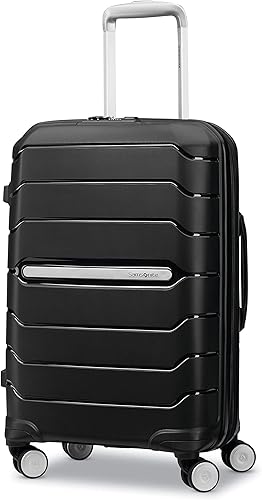
Choose the Samsonite Freeform if you want a polypropylene hardside case with an interior divider, straps and pouch. Skip it if you prioritize the lowest empty weight among these four options, or if its 15.25 in width and 10 in depth exceed your airline's limit.
Choose the Delsey Helium Aero if you want two packing compartments, a polycarbonate shell and an integrated TSA-accepted combination lock. Skip it if your priority is a lighter empty bag, since it weighs 8.4 lb.
Choose the Rockland Melbourne if you want an ABS hardside case with spinner wheels and a simple mesh and elastic pocket layout. Skip it if the full outside dimensions don't fit your airline's sizer or if you want more divided organization.
How should you make your final choice?
For the best carry-on luggage for your trip, check airline fit first, then choose by empty weight and packing layout. Pick the Travelpro for a light softside design with exterior pockets, the Samsonite for divided packing, the Delsey for two compartments and polycarbonate, or the Rockland for basic interior pockets.
Measure your bag, confirm each flight's cabin rules and pack with a little room for changes. Once you know the size you need, browse our carry-on luggage guides for focused comparisons on bags, packing and care.
Frequently asked questions
What is the best carry-on luggage for most trips?
The best carry-on luggage is one that fits your airline's current size and weight limits, holds your usual packing list, and is manageable to move and lift. Compare full outside measurements, including wheels and handles, then choose a shell and interior layout that match what you carry.
Is a 21-inch carry-on allowed on every airline?
No. A 21-inch label does not guarantee that a bag fits every airline's cabin limit.
Makers may measure the case alone or include wheels and handles, so compare the bag's full outside dimensions with the current rules for your airline and route.
Should I choose hard or softside carry-on luggage?
Choose softside luggage if you want exterior pockets and a flexible outer shell. Choose hardside luggage if you prefer a firm shell and divided packing space.
Compare each bag's actual weight, size, pockets and interior layout, since shell type alone doesn't determine how well it suits your trip.
Are spinner wheels better for carry-on luggage?
Spinner wheels roll in multiple directions and can make it easier to turn a suitcase beside you in a crowded space. Two-wheel bags can suit travelers who prefer to pull a case behind them.
Consider your airport route, surfaces and available room to maneuver.
How much should a carry-on weigh?
There is no single empty weight that works for every traveler or airline. Start with your airline's baggage rules, then account for the bag's weight and the items you plan to pack.
A lighter case leaves more of a limited weight allowance for your belongings.