Do You Need to Check In Carry-On Bags?
Usually no. If your bag fits your airline's carry-on size and weight limits, you keep it with you through security and onto the plane. You only have to check a carry-on bag when it breaks those limits or when the gate runs out of cabin space.
On this page (10 sections)
- Do you need to check in carry-on bags at the airport?
- What decides whether your carry-on has to be checked?
- How do you measure a carry-on so it doesn't get checked?
- Does carry-on weight get checked, and how do you stay under it?
- When will the airline check your carry-on for you?
- What happens if your carry-on is too big at the gate?
- Should you volunteer to check your carry-on?
- Which carry-on bag makes checking less likely?
- How do you pack so your carry-on stays in the cabin?
- The short answer on checking carry-on bags
Usually no. If your bag fits your airline's carry-on size and weight limits, you keep it with you through security and onto the plane.
You only have to check a carry-on bag when it breaks those limits or when the gate runs out of cabin space. Size and weight decide it, not the label on the bag.
Do you need to check in carry-on bags at the airport?
No. A carry-on that meets your airline's limits stays with you the whole way, from the security line to the overhead bin.
You walk past the check-in desk and head straight to security with the bag. No bag tag, no carousel wait at the other end, and no risk of the airline losing it.
The exception is a bag that's too big or too heavy for the cabin. In that case the airline treats it as checked luggage, and you pay whatever checked-bag fee applies.
Some fares complicate this. Basic economy tickets on several carriers allow only a personal item under the seat, so even a legal carry-on has to be checked or left behind.
What decides whether your carry-on has to be checked?
Two limits decide it: size and weight. If your bag passes both, it flies with you.
If it fails either one, it gets checked.
Airlines publish a maximum length, width and height for cabin bags. Many also set a cabin weight limit, and low-cost carriers enforce it more strictly than full-service airlines.
Your fare class matters too. A bag that's fine on a standard ticket may not be allowed in basic economy.
Finally, the flight itself matters. On a full plane, gate staff sometimes run out of overhead space and check bags at the gate whether or not they're legal.
How do you measure a carry-on so it doesn't get checked?
Measure the bag as the airline measures it, including wheels, handles and any side pockets that stick out. The empty shell is not the number that counts.
Stand the bag upright and measure its height from the floor to the top of the handle. Then measure width and depth at the widest points.
Compare that against your airline's published limit.
Our guide to how to measure carry on luggage walks through the exact spots to check. A soft bag that's slightly over can sometimes be squashed into a sizer, but a hard shell won't budge.
If you're still shopping, start with what size is a carry on bag so you buy inside the limit instead of fighting it at the gate.
Does carry-on weight get checked, and how do you stay under it?
Some airlines weigh carry-ons, especially low-cost carriers with tight cabin limits. A full bag of books or liquids can tip you over before you reach the gate.
Weigh the packed bag at home on a luggage scale. That's the only way to know before the airport, and it takes seconds.
The Etekcity reads in pounds or kilograms on an LCD screen and runs on a CR2032 battery that's included. It's small enough to pack for the return trip, when souvenirs add weight.
The scale shuts off after two minutes idle so the battery isn't drained in your bag. A low battery and overload indicator warns you when a reading can't be trusted.
The grip on the handle matters more than it sounds. A heavy carry-on hanging from a bare hook is awkward to hold steady, and a slipping bag gives you a wrong number.
The ergonomic handle keeps the bag level while the display settles.
Weigh the bag the night before you fly. If you're close to the limit, move heavy items to your personal item or wear your bulkiest layer.
When will the airline check your carry-on for you?
Airlines check carry-ons at three points: at check-in if the bag looks oversized, at the gate if it's too big or the cabin is full, and at security in rare cases when a bag won't fit the scanner.
Gate checking is the most common. On a full flight, staff announce that volunteers can check bags free, and sometimes they require it.
If your bag is legal but the flight is packed, volunteering can save you from wrestling it into a tight bin. You collect it at baggage claim on arrival.
If your bag is illegal, gate checking usually comes with a fee. Paying for a checked bag online in advance is often cheaper.
What happens if your carry-on is too big at the gate?
The gate agent charges a fee and tags the bag for the hold. You lose the convenience of keeping it with you, and you pay more than you would have at booking.
Budget airlines are strictest here. Their sizers sit right by the gate, and staff ask anyone with a bulging bag to test it.
Full-service airlines are more relaxed, but not always. If the cabin is full, even a legal bag can end up checked.
The fix is simple: measure and weigh before you leave. A bag that fits needs no argument at the gate.
What does a carry-on sizer actually check?
A sizer is a metal frame matching the airline's cabin dimensions, and your bag has to slide in without force. Wheels and handles count, so a bag sold as cabin size can still fail if its exterior is measured differently.
That's why the exterior number matters more than the interior. The Samsonite Omni 2 measures 22 x 14 x 9 inches with the wheels and 20 x 14 x 9 inches inside, so the outside figure is the one to hold against a sizer.
Should you volunteer to check your carry-on?
Volunteer when the flight is full and the airline offers free gate checking. You trade the bag for easier boarding and a lighter walk through the airport.
It's also worth it when you're carrying liquids or souvenirs that would slow you down at security. Gate-checked bags skip the cabin bin fight entirely.
Don't volunteer if you need the bag on arrival, like a tight connection or medication you can't check. Keep essentials in your personal item either way.
Which carry-on bag makes checking less likely?
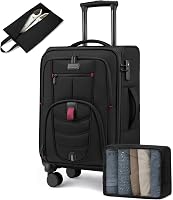
A bag sold as airline-approved and built to standard cabin dimensions gives you the best odds of keeping it with you. The Samsonite Omni 2 is sized to meet the common 22 x 14 x 9 inch limit.
The exterior measures 22 x 14 x 9 inches with the wheels, and the interior gives you 20 x 14 x 9 inches of packing room. It weighs 7.5 lb and rolls on four spinner wheels.
It has a built-in charging system and expands 1.5 inches for the trip home. The carry-on size doesn't include a TSA lock.
The polycarbonate shell has a scratch-resistant brushed texture, so the outside still looks clean after the baggage belt on the trips where you do check it. Inside, elastic tie-down straps and a zipped mesh divider keep the load flat against the shell, which helps the bag close without bulging past its dimensions.
Pack it light and it stays in the cabin. Add organizers only if they fit inside the shell without pushing it past the limit.
Can packing cubes help a carry-on pass the limits?
Yes, when they keep the load compressed inside the shell. Buckle straps cinch a full cube flat so clothing doesn't push against the zipper and swell the bag past its exterior size.
Keep the weight of the organizers in mind when your airline has a tight cabin limit.
How do you pack so your carry-on stays in the cabin?
Pack to the limits, not past them. A bag that closes easily, weighs under the limit and fits the sizer won't get checked against your wishes.
Start with the airline's size and weight numbers. Then pack soft items around the edges and keep heavy things near the wheels.
Wear your bulkiest layer on travel day.
Leave a little slack for the return trip. A bag that's packed tight on the way out has no room for anything you buy.
Weigh it before you leave. A luggage scale and a few minutes of prep beat a gate fee and a wait at the carousel.
The short answer on checking carry-on bags
For most travelers with a legal bag, you don't need to check in carry on bags at all. Measure the shell against your airline's limit, weigh the packed bag, and keep it with you.
The cases where you do check one are clear: the bag is too big, too heavy, or the cabin runs out of space. Know your airline's numbers before you leave so none of those surprises happen at the gate.
If you're still choosing a bag, read how much can a carry on bag weigh to match the weight limit to your fare. Then buy a bag built to the cabin size, and pack it light enough to stay there.
Frequently asked questions
Can I take a carry-on and a personal item on most airlines?
Most full-service and many low-cost airlines allow one carry-on plus one smaller personal item that fits under the seat. Basic economy fares on some carriers limit you to the personal item only, so read your fare rules.
Is a carry-on weighed at the airport?
Some airlines weigh carry-ons at check-in or at the gate, especially on low-cost carriers with strict cabin weight limits. A small handheld scale lets you check the weight before you leave for the airport.
Can I volunteer to check my carry-on to save time?
Yes. Many airlines ask for volunteers to gate-check bags on full flights, often at no cost.
You part with the bag at the gate and collect it at the baggage carousel on arrival.